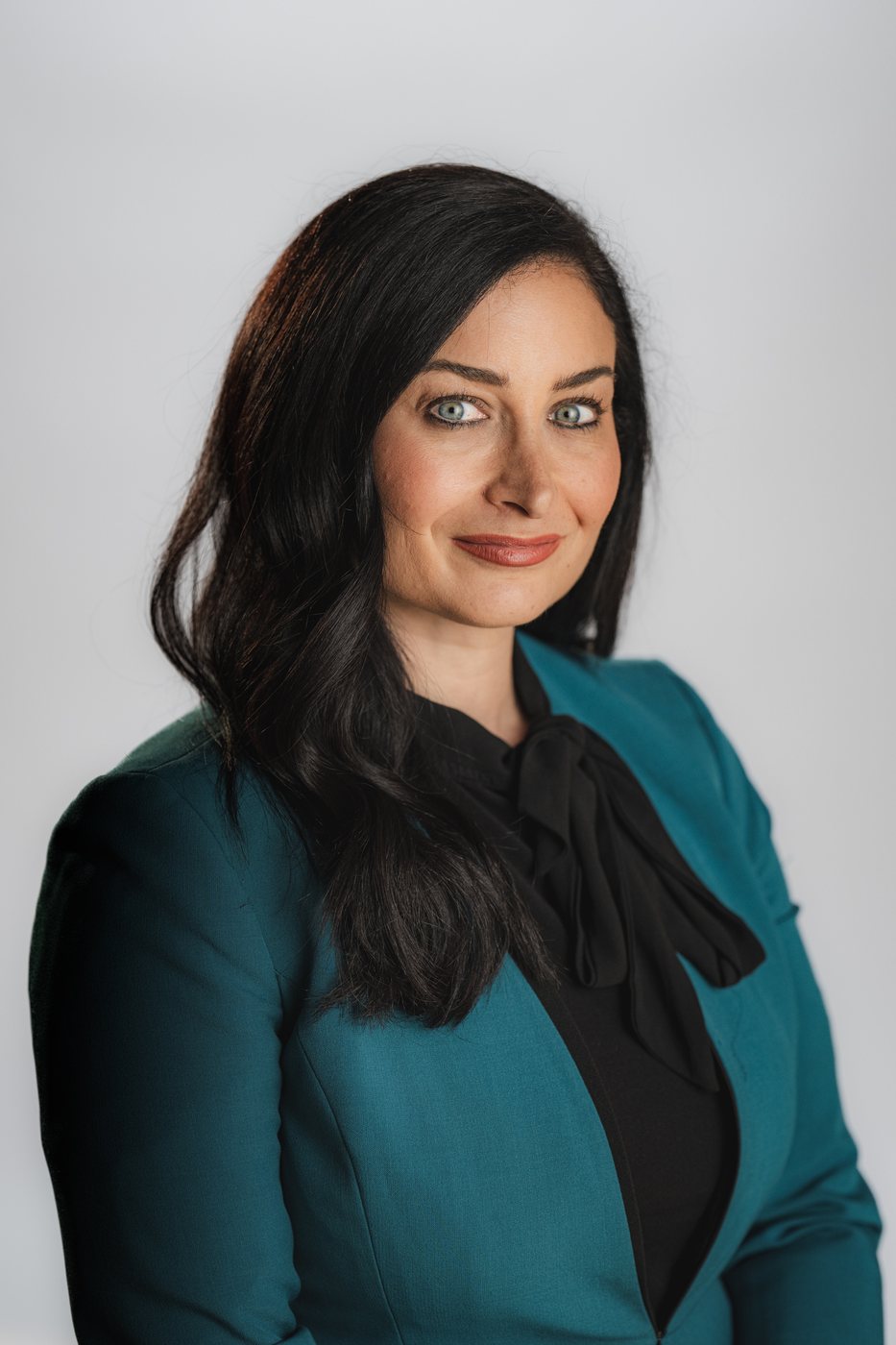
I am Leila R. Golchehreh, an attorney admitted in California. I mediate commercial, corporate and workplace disputes, and I serve as fractional general counsel to technology companies from pre-seed through Series C.
Discuss a matter How mediation works
I mediate commercial, corporate and workplace disputes for companies, their leaders and the people who work with them, in English or French. My aim in every matter is a resolution the parties have reasoned their way to, and one they can live with once it is signed.
I am a four-time founder as well as an attorney. I served as counsel through the Adaptive Insights IPO and its acquisition by Workday, was General Motors Cruise's first cybersecurity, AI and privacy lawyer, and have worked with companies, international organizations and governments across the United States, Europe, Asia and MENA. That experience lets me see quickly what is commercially at stake as well as what is legally at issue, and it brings particular depth to disputes involving technology companies, their leadership and their boards.
A dispute can be mediated at any stage: before anyone files, during litigation or arbitration, or after judgment while an appeal is pending. The earliest point is often the best one, while the relationships and the business still have value.
Mediation is also useful outside formal disputes. Where a negotiation has stalled, or a separation is better negotiated than litigated, a neutral can keep the discussion moving.
Before the session I speak with counsel for each side, separately and in confidence, to understand what is in dispute and what is driving it. Each party submits a brief, either exchanged or for my eyes only, about ten days before the session. I read everything and, where it helps, do my own work on the legal and commercial questions.
Where it serves the parties, the day opens together. Each side sets out how it sees the matter, and I summarise each account back so that everyone knows it has been heard accurately. The aim at this stage is clarity about what is keeping the parties apart.
I then meet each side separately and in confidence. This is where risks are tested candidly, where information can be shared without weakening a negotiating position, and where options beyond money come into view.
When the movement slows, I may offer a mediator's proposal, to which each side responds in confidence. A term sheet is signed before anyone leaves, so the agreement reached on the day is the agreement that is documented.
If a matter does not resolve on the day, I stay with it. Many settlements close in the week after a session.
Either party, or counsel, can make the first approach. If you are unsure how to raise mediation with the other side, contact me and I will help you propose it.
The single greatest factor in reaching resolution is the attendance of the people with real authority to settle.
Please keep briefs to ten pages, with only the exhibits that decide the matter. Attach the governing agreements and the documents on which the matter turns.
Sessions take place anywhere in the world, in person or by video, in English or French. Most matters are scheduled as a single day.
Every mediation is confidential. The parties sign a confidentiality agreement before the session, and in California, communications are also protected by Evidence Code sections 1115 to 1128.
Before accepting any matter I run a conflicts check and disclose anything a reasonable party would want to know. As a mediator I do not represent or give legal advice to any party. I follow the California Rules of Court standards of conduct for mediators in court connected matters and apply the same standards to private ones.
For companies from pre-seed through Series C, I own the legal function end to end, covering commercial, corporate, employment, IP and regulatory, and build the playbooks, contracts and processes which scale with the business.
The work is done from the inside. I sit with the founders and the board, attend the meetings where decisions are made, and hand the function over cleanly when the company is ready for its first full-time general counsel. Engagements are by monthly retainer under a written engagement letter.
Leila R. Golchehreh is an attorney admitted in California. Her practice is limited to mediation and fractional general counsel work for technology companies and the people who build them.
She spent her early career in Paris, at A&O Shearman and the OECD, and at the U.S. Mission to the European Union and the French Trade Office. In-house, she advised Workday and Adaptive Insights, serving as counsel through the Adaptive Insights IPO and its acquisition by Workday, and was General Motors Cruise's first cybersecurity, AI and privacy lawyer. She then co-founded a venture and debt backed enterprise AI company, where she served as Chief Strategy Officer, Acting General Counsel and a board member.
She authored Workday's written evidence to the UK Parliament's House of Lords Select Committee on Artificial Intelligence, is an Editor of the 2026-27 IAPP AI Governance Book, and speaks regularly on AI governance and privacy, including the closing keynote of the IAPP Europe Data Protection Congress in Brussels. She holds an LL.M. with distinction in French and European law from the Sorbonne and works in English and French.
Separately, she advises founders, executives and boards on strategy and growth through Silicon Valley Trust, an advisory and coaching practice operated by Lexplique LLC. That practice does not provide legal services.
The process is voluntary and either party can leave at any time. A settlement agreement signed at the end of mediation is a binding contract, and it can be drafted to be enforceable in court.
Not always, though in most matters each side benefits from counsel. Parties who attend without counsel can have the agreement reviewed before signing.
Yes. Mediation can run alongside a pending case, and many courts and arbitration rules encourage it.
Imbalances of resources and information are common. Private sessions let each side be heard on its own terms, and my role is to make sure each decision is an informed one.
Often, yes. Much of a general counsel's work is transactional and regulatory rather than tied to one state's courts, and where local admission is required I work with local counsel. We settle this in the engagement letter.
No. A mediator is a neutral. I will not mediate a dispute involving a current or former client, and I will not represent a party to a dispute I have mediated.
To propose me as mediator, or to discuss fractional general counsel work, call or write. For a possible mediation, please share only the names of the parties in your first message so that a conflicts check can be run, not the details of the dispute.